May 22, 2010

Album Review - Harlem

BAND NAME: Harlem

LP TITLE: Hippies

LABEL: Matador Records

TRACKS: 16

RATING: 7/10

“The only band we like is Nirvana. The only album we like is Nevermind. The only song we like is “Smells Like Teen Spirit.” No, this is not an obituary for a delusional albeit loyal Nirvana fan that took his own life after realising that Kurt Cobain was never coming back. And this isn’t even the press release for a Nirvana tribute band that stubbornly refuse to learn, or write any other song, in fear of selling out and dishonouring the aforesaid grunge legends.

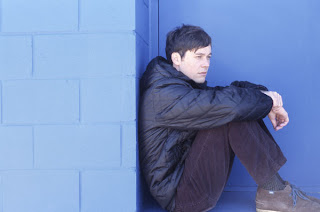
These are in fact the words of Harlem, a 3-piece Austin based outfit that take the term garage rock as literally as possible.

And so you might make a pre-conceived judgement about the group’s 2nd record, Hippies: of being nothing more than a novelty act by overtly eager Nirvana wannabees.

Oh how wrong you would be.

Harlem is the passion project of Michael Coomer and Curtis O'Mara – Tucson natives who migrated to the live music capital of the world: Austin, Texas. The two comrades have been playing together since adolescence and therefore have developed a unique synergy that sets them apart from the bevy of tuneless and asynchronous noise-rock purveyors. Though occasionally out of tune yet by no means out of sync, Coomer and O'Mara equally divide songwriting credits and instrumentation on Hippies, and the fine line of this balancing act makes for a far more intricate and engaging listen.

Hippies is indisputably a record based in the past. It acts as the cliff notes for entire musical eras – Blues, rockabilly, surf-pop, punk, grunge and garage rock are all revisited (ironically the one genre we would have expected from an album with this title is missing), remastered and covered in a thick layer of gauze before being spat out for public consumption. And as is true of any genuine exercise in revivalism, from the point of view of the artist, it is ultimately all about the escape. An escape to a time of innovation and passion: be it the anarchic chaos of the Sex Pistols, or the sundrenched harmonies of The Beach Boys. Thus, the more accurate, familiar and faithful the music on the record is to its past equivalent, the closer said revivalist can get to the romanticised times. In other words, rather than labelling Hippies as an unoriginal copy, one should see it as an attempt to recapture the authenticity and spirit of great moments in musical history: moments that the lads from Austin were denied by the inconvenience of being born too late.

Over the course of Hippies, and through the range of bygone styles and genres, we realise that we are witnessing the evolution of rock music take place on this lo-fi sleeper of a record. From Chicago blues (“Stripper Sunset”), to 60s surf-pop (“Number One”), to Buddy Holly-esque power ballads (“Be Your Baby”), to thrashy punk (“Friendly Ghost”), to a sugar-coated rendition of grunge masterpiece “Lithium” (“Gay Human Bones”) - Harlem has merged the shambolic history of rock into a concise album format. And yet there is something distinctly less threatening about the rock-influenced songs on this record. It is almost as if the original intensity and motive has been extracted, in favour of something fun and easy to dance to. One could say that Harlem is punk, without the aggression; or grunge, without the depression. It is up to the listener to decide whether this is a positive or negative thing.

Yet all these genres have one thing in common when channelled through the Harlem machine – they come out stripped-down and raw. Raw is a word that seems to arise a disproportionate amount of times when discussing Hippies. The record completely lacks any studio sheen whatsoever, and sounds so unadulterated that one gets the impression of a home or garage recording. But Hippies is Harlem’s inaugural release on the feted Matador Records – which has produced equally scuzz/fuzz records by acts such as Fucked Up, Kurt Vile, Jay Reatard (R.I.P.), Girls and Sonic Youth. Contrary to Harlem’s first album that was distributed on a minute scale by a now disbanded recording company, Hippies was recorded in the studio in a perhaps more conventional way then Harlem were accustomed to. Yet lest you read this as a pre-emptive excuse for producing a second-rate product - understand that Harlem’s sound has changed very little, and the group’s knack for penning driven and jagged lo-fi accomplishments is still very much present. If anything has changed, it would be that their sound is more refined, honed and simply more mature than their first release; and that kind of change should be embraced and not shunned.

Energy is another word that describes the overall feeling and aesthetic of Hippies. The record teems with frenetic energy, the truculence of youth and a brash lack of subtlety. The end result is a raucous, wild and exhausting listening experience. It succeeds both as a product of modern-day low attention spans, and as their hopeful panacea – by throwing everything they’ve got into each song and creating an exceptionally contagious collection of tracks, that on a whole clock in at around 40 minutes. By increasing the number of songs on the album to 16, and decreasing track length, to a mean average of two and a half minutes, Harlem has successfully, and probably inadvertently, created the perfect album for this generation of listeners; short songs that pack a punch, and enough of a varied theme to keep one interested - so hats off to the boys for that.

Yes we can read between the lines and overanalyse to the point of dehumanization. But at the end of the day, Hippies is a no-frills garage-rock record that is fun and energetic, and the utter lack of pretence is a breath of fresh air in this era of overproduced corporate drivel. It is true that their sound may not be completely original, and that the album may not flow seamlessly, but this doesn’t detract from the listening experience. And at its core, Hippies is a celebration of 50-plus years of rock music, distilled to its natural essence – so appreciate it for that if nothing else.

April 15, 2010

Is Washed Out the Future of Electronic Music?

“History repeats itself, first as tragedy, second as farce.” Though this Marxist quote was generally referring to something other than the music industry, it can be applied just as accurately to it. Take for instance, the disco movement. Beginning in the 70s, early disco was a glorious albeit gaudy snapshot in musical history. Fast forward a few decades and we have the tragic rebirth of disco. This post-disco period is a time many music historians tend to conveniently forget out of sheer embarrassment. But fortunately, this phase faded rather fast, and now, come the first decade in the 21st century, we see the ghost of disco infiltrate our airwaves again. This time however it is done with ironic intentions in mind so is therefore accepted into society without ridicule. First created, then tragically reinstated, and then satirically born again; history has the tendency to repeat itself.

In short, we live in an era of post prefixes (post-punk, post-rock, post-grunge…) and revivals. We are so obsessed with taking a dated concept and injecting new life into it, that in the process we are losing our innovative spark. Music-wise, this means a lot of hearing the same old things, over-and-over again. So if repeating history too many times will inevitably end up in farce, clearly we need to create something brand-new and unprecedented.

You have to give it to Washed Out for trying damn hard to create a new sound that is not confined to any past era or post genre.

Washed Out is the one-man-project of multi-instrumentalist, Ernest Greene. He creates music in his parent’s house in rural South Carolina. He shuns corporate record moguls, and instead distributes limited numbers of cassettes to only his closest relations. He shies away from media attention, and was labelled agoraphobic for his general distaste of the outside world. And yet Washed Out has been celebrated by the musical elite and raved over by critics and listeners alike.

Perhaps Mr Greene errs on the side of the quixotic. Or perhaps he simply enjoys the allure of exclusivity and finds comfort in his lavish dream worlds. This could explain his latest creation, Life Of Leisure, a record that resembles a woozy Technicolor frolic through a field of opiates.

On this fresh and hazy record, the gentle shifts of rhythm and melody triggers nostalgic responses and provide a perfect platform for reconciliation, and meditation. The record plays like a sleepless night, where perception is enhanced and reality is altered.

This sonic haze and postmodern ambience is a taxonomist’s nightmare. Of course many have come up with their own tags to describe this music: Dream-pop, chill-wave, post-electro, lo-fi, glo-fi and no-fi; they all are slightly imperfect phrases for describing a style of music that is generally one or all of the following: lackadaisical, hypnotic, cassette-recorded, warped, affable yet not encouraging, pleasantly apathetic, sun-baked, laid-back, slightly out of focus and… Washed Out.

Yet as far as labelling goes, perhaps the aforementioned do not do Life of Leisure justice. A solid piece of sonic architecture, the record assembles an array of sounds and textures, adds sporadic splashes of static atmosphere and in the process creates a listening environment that is truly magnificent.

The vocal prowess of Ernest Greene remains something to be reckoned with. He seduces us with enigmatically opaque lyrics, a breathless urgency and crystalline arpeggios. His languid vocals float weightlessly above the ebb and flow of the melody below.

In fact, so relaxed and lethargic are Greene’s musings that one almost picks up a sense of boredom. And yet it is boredom without negative connotations. It is the kind of boredom that spurs artists like Greene to retreat to their bedroom and experiment with synthesized aesthetics. It is the kind of boredom that then inspires individuals to turn those electronic webs of irresolution, into fully realised songs. It is the kind of boredom that should not be frowned upon, but on the contrary, embraced - for boredom leads to innovation.

Life Of Leisure sounds surprisingly contemporary, and at the same time painfully familiar. The half articulated musical messages evoke countless sentimental connections and unreachable desires. Layers of sound are fed through a filter of nonchalance, which gives the record an emotionally distant feel; though this is not necessarily a bad thing.

Ernest Greene’s electro-vignettes are all recorded in his parent’s house, on dated recording software. But again, this adds to the mystery and attraction of Washed Out’s music. Greene seems to attack the recording process with a mix of extraordinary genius and naive incompetence. Some instruments are recorded live, whereas others are simply loops downloaded from the Internet. Occasionally you can hear a snippet of conversation, or footsteps, or birdsong, and it makes you wonder whether the effect is the result of an overlooked recording device, or a precisely planned vision.

Washed Out’s music does not strive to enhance or better your life, but to help you simply appreciate the now. Ernest Greene is not enlightened nor does he claim guru status; on the contrary he’s a giddy if naive Southerner that has found happiness within his artistic medium. Pushing the confines of what is perceived to be electronic music, Greene explores various genres and in doing so crafts his own entirely. Life Of Leisure could perhaps be described as the encapsulation of relaxation and happiness; or better yet, the rejection of anxiety and fear. No, this won’t change your life or help you understand the world better, but it will give you a 20-minute break from the harsh realities of Western life. And in a place where time is money, isn’t that worth something?


February 1, 2010

Album Review: Vampire Weekend - Contra


BAND NAME: Vampire Weekend

LP TITLE: Contra

LABEL: XL Recordings

TRACKS: 10

RATING: 7.5/10

The modern day rock star job description states that, one must look, sound and act like ridiculous, pretentious caricatures of themselves, at all times. Some have a deep, rudimentary understanding of this way of life, and succumb to tabloid wishes by refusing to drive unless thoroughly intoxicated, and living by the maxim of, “this aint a party until I get kicked out of the club for either engaging in a vicious brawl, or being in possession of class A narcotics.” Others, like many self-proclaimed rappers, were born ludicrous and so arrogant, that they had to become famous and widely revered, to avoid imploding in a blaze of impotent self-hatred.

Enter Vampire Weekend: a New York quartet who completely contradict the aforementioned rock star ideals of addiction, self-absorption and lunacy. Instead of fast cars and cocaine, the members of Vampire Weekend commute on bicycles and indulge in gourmet French cuisine. Instead of diamond-encrusted jewellery that probably cost more than the average consumer’s yearly income, Vampire Weekend prefers loafers and pastel sweaters. And instead of songs about drugs and promiscuous sex, Vampire Weekend sings about punctuation, classical architecture, higher education and post-modern society. But their debut record has reached gold status, their photo has adorned numerous internation al music magazines, and the band has performed at some of the most prestigious locations in the world. So without a doubt the boys of Vampire Weekend are as much rock stars as any cocaine snorting, fast-car driving, attention seeking deadbeat.

Ask any band and they will tell you that their second album is always steeped in scepticism and incredulity. It seems to be an unspeakable curse that the second record should often be a disappointment and merely a hurdle to get to album number three and beyond. A few daring artists have attempted to leap from debut to third album, but unfortunately they realised a second album is inevitable, and avoiding it is about as easy as unbending a corkscrew via telekinesis. Though The John Butler Trio ingeniously found a way of avoiding the second album debacle, by entitling their sophomore release Three – the album went platinum.

Now Vampire Weekend’s Contra, not only suffers from second album syndrome, but also has to deal with being a follow up to one of the most blogged-over, hyped up and successful debuts ever released in the 21st century music scene. After such an incredible first album, the expectation surrounding Vampire Weekend’s second release was suffocating – the public were expecting something great, and if Vampire Weekend did not deliver at least an equally admirable second release, they faced industry pariahdom. Most other bands would have been slightly derailed by the hype accompanying their eponymous debut and the sheer weight of expectation and pressure heaped onto their second album. But it’s quite clear by now that Vampire Weekend is not most other bands, and that they play by their own set of rules. And if anyone can overcome the aged curse of the sophomore slump, then Ezra Koenig and his band of educated over-achievers, most certainly can.

Contra is a more mature, more diverse and simply more substantial (despite clocking in at 36 minutes) album that shows an emotional depth not present on the band’s debut. The opening run of songs is characterized by a soft and wide-eyed melodic gracefulness. “Horchata” harnesses a gentle calypso beat to evoke a nostalgic reverie. Front man and lyricist Ezra Koenig rhymes horchata (which is a Mexican beverage) with balaclava, Aranciata and then Masada. “White Sky” is a multi-textured Afro-pop joy - a stirring homage to the Manhattan skyline, surpassing any other musical intricacies found on their debut. Yet all albums have their low points and on Contra it is tracks three and four. “Holiday,” a rather mainstream ska-pop workout attempts to re-capture the light-hearted vigour of numbers such as “M79” and “A-Punk,” but without the customary élan. And “California English,” the band’s ironic approach to auto-tune, ends up being a sonic farce, which is, confusing, irritating and entirely skippable. But on the whole Contra delivers. It will surely please Vampire Weekend fans, but will probably not turn naysayers into believers.

Because of its eclecticism, the appeal of Contra is relatively limited to a small group of listeners. People who enjoy music that has lyrics that may require a dictionary to decipher; music that features rhythms from around the world - in short, Vampire Weekend appeals to an audience of intelligent, cultured and possibly affluent individuals. So if one tried to introduce Vampire Weekend to, say a classic rock or hip-hop fan, it would be similar to attempting to explain existential beliefs to a born-again Christian.

What Mr. Koenig really has strived to achieve with Contra is the respect of cynics and sceptics who unfairly dismissed Vampire Weekend's eponymous debut as a over-ambitious imitation of Paul Simon's Graceland, penned by a crew of post-collegiates far too convinced that they're clever and quirky, with a presumably superficial understanding of the African sounds they were stealing. The band's preppy smugness undoubtedly rubbed many people the wrong way. But instead of trying to live it down, Vampire Weekend quite wisely chose instead to live it up.

Vampire Weekend seem more prepared this time around. Yes their tracks are still imbued with Afro-Pop rhythms, but with Contra these tribal beats meld seamlessly with Rostam Batmanglij’s synthesizers and guitar lines and sound right at home. Instead of using African music as a gimmick to sound different from the status quo, the band uses the rhythms to enhance and enrich their songs. Filled with new ideas, yet altogether familiar at the same time, Contra is no radical leap in any new direction, but rather a calculated step towards a maturity and precision that only comes with time

Vampire Weekend is the thinking man’s band. Ezra writes lyrics that would serve him very well in a game of Scrabble – they would be cloying if not sung with such relish. And Vampire Weekend is the rich man’s band. With music videos that are often mistaken for Ralph Lauren commercials, Vampire Weekend wear their affluence and privilege on their sleeve, and though often delving into the pretentiousness and self-parody, they do not attempt to conceal their Ivy League smugness which I suppose is commendable. Vampire Weekend is also the cultured man’s band - drawing influence from African tribal rhythms, Mexican Mariachi beats, and Caribbean grooves. And you see, this is why Vampire Weekend is so good. They play what they know, and do it so well. Yes they are smart, rich and privileged white boys, but they don’t try to hide it.

There will always be haters and cynics, but based on the success, both critical and commercial, of their first two albums, there doesn't appear to be a tangible limit to what future splendour the boys of Vampire Weekend may achieve.

December 28, 2009

Album Review - Girls


BAND NAME: Girls

LP TITLE: Album

LABEL: True Panther Sounds

TRACKS: 14

RATING: 8/10

The origin of Girls is one of almost mythical calibre. Over the course of the band’s relatively short existence, only two things have remained consistent in their ever-changing world of debauchery, misadventures and religion - a predilection for pharmaceutical induced highs, and an almost pathological obsession for The Beach Boys. The fusion of the aforementioned produces a result that is both astonishing and beautiful.

To further explain, listening to Girls is like listening to The Beach Boys while on Quaaludes.

Yet in order to fully understand, appreciate and analyse the music of Girls, one must recognise the turbulent albeit tragic childhood of front man Christopher Owens.

Owens was born into the highly controversial Children of God cult. Founded by an outspoken anti-Semitic paedophile, Children of God is a fundamentalist Christian offshoot that focuses on apocalyptic ruin and human sexuality. That’s some messed up shit right? Owens’ father abandoned the family (can you blame him?) so his mother - a firm believer in the cult’s practices, raised young Christopher alone. Together they lived a nomadic lifestyle and travelled the world searching for souls that needed ‘salvation.’ Owens experienced countless tragedies whilst living in this perverse milieu - from the death of his brother (due to the cult not believing in medical treatment), to the wilful prostitution of his own mother (to raise money for the cult’s exploits.) Christopher truly lived a life most youth could not even fathom. Escaping the cult at 16, Owens then moved to Texas and drifted around in the backwaters of society. Just when it seemed his future was destined to consist of shady drug deals, petty crime and a probable early self-inflicted demise, a local wealthy philanthropist took Owens under his wing and gave him newfound hope and a way out of his current self-destructive lifestyle. Soon after this, Owens met future band-mate JR White and the two moved to San Francisco, where they would write and perform music together under the moniker Girls.

As far as band chronicles go, this one is so epically proportioned that you cannot possibly doubt its integrity. It is the type of history that can overwhelm and envelope a band so much so, that one never really hears the music; they only hear the story. So it's a tribute to Girls that you do not have to have any prior knowledge of the band to hear their music as it is: Hypnotic and seductively tortured.

Girls debut album is simply called Album, but despite the seemingly lack of inspiration when it came to naming their musical debut, the title holds some truth about the duo. Obvious, plain and straightforward, Girls have nothing to hide. Yet it is the subtle nuances of Album that make it so fresh and addictive.

Just like the vast array of narcotics consumed during recording, the music on Album drugs you into a peaceful state of innocence and youthful abandon. Owens’ voice is affable and endearing. When he fervently sings, you believe every word. And when he laments about his troubles in a beguiling and jaunty tone, with a raw quaver at the back of his throat, there is no trace of insincere affectation. The other half of Girls, JR White, handles production and most instrumental duties. White's meticulously produced arrangements help organize and highlight Owens’ meandering and psychedelic ideas. White helps Owens create a canvas on which he is able to paint his tragic landscapes.

Album masterfully encapsulates the relaxed and carefree lifestyle of California. But underneath the faultless and cheery pop façade, is a fragile, darker side that represents the realities of Owens’ life. It’s a stark contradiction that makes Girls music unique. The duo puts their alchemy of sound through a sepia-toned sunshine filter. The result of which is an ethereal haze, a sound that completely transcends any genre restriction. Bittersweet yet entirely comfortable, nostalgic yet not wallowing in the past - a musical achievement that successfully integrates many a decade worth of musical styles and then serves them in a minimalistic package.

The Beach Boys influence is by far the most prevalent on Album. From the twangy guitar lines on “Laura,” to “Big Bad Mean Motherfucker,” a complete throwback to surf-pop - the duo draws on several 60s musical styles to create their fresh new sound. Channelling Brian Wilson on many occasions, Christopher Owens adds a tormented depth, unbeknownst to the famed Beach Boy. Album is best described as a lo-fi Pet Sounds, a stripped down version, completely free of the lavish orchestration but retaining the harmonies, melodies and aesthetic of The Beach Boy’s opus. With that said, there are many other genres and styles found on Album. From poppy, bubblegum beats – à la Turtles, to the shoegaze soundscapes of My Bloody Valentine, to Elvis Costello-ish musings and Buddy Holly inspired ballads. Album is a musical platform for an amalgamation of genres, styles and influences to emerge.

Another impressive and surprising aspect of Album is the fact that no song on it was recorded in a studio. Mostly recorded in cramped, dingy rehearsal spaces on computers that were well passed their used by date and now probably considered retro, Girls possess a nonchalant attitude when it comes to recording procedures. But the lack of production work and studio flare gives Album an even more authentic and uncommercial feel. Possibly due to the poor recording conditions, but more likely because of the copious amounts of prescription pills taken, the record jumps from genre to genre in no recognizable pattern. However, whilst it is a schizophrenic listening experience, there is something pleasantly disconcerting about the duo’s endeavour.

Yet discussing Album also raises a lot questions. What if it had been recorded in a studio with professional grade equipment? Could it possibly have been our generation’s Pet Sounds? Would it have been an iconic album that defined the new millennium? Instead, due to its rough avant-garde quality and Christopher Owen’s unrefined voice, Album never found a wide audience and was left orbiting the indie stratosphere enjoyed solely by a handful of musical connoisseurs. So perhaps the most important question we should be asking is, what’s next for these guys, or should I say, Girls?

November 30, 2009

Is This The End For Basement Jaxx?


BAND NAME: Basement Jaxx

LP TITLE: Scars

LABEL: XL Recordings

TRACKS: 13

RATING: 5/10

Basement Jaxx, the cross-genre-fusing South Londoners, have been making bona fide party music since the beginning of the millennium. Yet as 2009 comes to an end, and we bid adieu to this decade, it seems rather probable that in turn we are also farewelling Basement Jaxx from the dance and techno scene. In 1999 with Remedy, 2001 with Rooty, and then followed up by the titanic success of Kish Kash, which won the duo a Grammy and is still considered one of the best modern electronica albums ever, Basement Jaxx have produced hit after ubiquitous hit, and infected the world with their eclectic buzz. So it’s impossible to deny the fact that these boys know how to party. Yet on Scars, their 5th musical endeavour, they are making music for a party that is well and truly over. This time around, the music is best suited for the post-party stage. Everyone has gone home; your house resembles the aftermath of an earthquake; the alcohol has worn off and as you frantically clean up dried stomach waste from your white suede sofa, you hear a collection of songs that truly encapsulate your frenzied, sick and slightly delirious mood. Welcome to Scars – messy and disarrayed, yet without question party, or rather, post-party music.

Basement Jaxx appear to be well past their prime, though this comes as no revelation. They seem to have been making their way to this point for a while. After the underwhelming Crazy Itch Radio and then the band’s three-year lull, where no new material was recorded, the general public were becoming slightly sceptical at the longevity of the once dominant party machine. Scars was either going to resurrect the duo, and vault them back to their place of worship, or it would confirm many predictions that Basement Jaxx no longer possesses that x-factor, and is merely a shadow of its once holy self. In short, the band has run out of steam, and is the farthest away they have ever been from the apex of their successful career.

Once a dynamic duo eager to break free from the archetypes of the dance genre in favour of creating something distinct and exciting; the duo has opted for the generic and predictable. The overall lack of variety makes for a consistent albeit dull album, which leaves a bland after-taste in the listener’s aural palette. This tastelessness is exacerbated by tracks that segue and dissolve into each other, repeating former themes until they are indistinguishable and monotonous.

Though you’ve got to give the boys some credit for assembling one of the most diverse group of collaborators imaginable. Yet what can we expect from a duo whose limitless energy and hedonistic abandon is a form of catharsis in itself. Electronica poster-girl Santigold, radio-favourite Sam Sparro and the one-and-only Yoko Ono, all feature on Scars. But these guest stars make it impossible for Basement Jaxx to stamp their iconic club-meets-house trademark on the songs. The duo step back, and allow the “featurers” to do all the work. Are the boys really that lazy? Or perhaps they are timid and uncertain regarding their precarious position in the current music scene.

So as we near the end of the decade, and reminisce about the definitive musical moments, we should fondly remember Basement Jaxx as they were in their prime – and not dwell on the inadequacy of their latest release. We should recognise the past successes of the duo - and not feel totally dissatisfied with Scars. But all good parties come to an end, no matter how long you attempt to delay and postpone the inevitable. Scars represents the end of an era - after a decade of partying, its time for the boys to take a break.

November 13, 2009

Where The Wild Things Are: Original Motion Picture Soundtrack


ARTIST NAME: Karen O and the Kids

LP TITLE: Where The Wild Things Are Soundtrack

LABEL: Interscope Records

TRACKS: 14

RATING: 8/10

Maurice Sendak’s Where The Wild Things Are was an unprecedented achievement. Here was a book that was written for children, yet equally enjoyed by the adults reading it to them. This was a book that completely transcended all age levels and possessed different meanings to those reading it. Young children were swept up in Max’s adventures and would forever more don a wolf suit and make mischief of one kind, and another. Yet to the older eye, the world Sendak had created was compelling and provocative and would need hours of psychological analysis to fully appreciate and understand.

This is a book that has sold over 19 million copies worldwide, has been translated into 15 different languages, has won numerous awards, and is arguably the most celebrated, cherished and respected children’s book ever written. So a movie version of this literary juggernaut was inevitable. Disney allegedly tried to secure the rights for a film, never expecting to be declined by the author. We have Maurice Sendak to thank for saving this beloved classic from turning into an animated, over-sweetened, commercialised monstrosity. For years the idea of a movie drifted around in the backwaters of Hollywood, until Spike Jonze, with Sendak’s blessing, began the process of making the 10-sentence book into a feature length film.

Now for me, good music is integral to the overall feeling and aesthetic of a film. How can one think of Ghostbusters without humming its eponymous theme? And would Jaws really have been as scary without its ominous two-note composition? Yet the concept of a true film score is becoming more and more a dated concept, giving way to the modern soundtrack – which is essentially a collection of previously recorded singles that supplement the movie. And so it's been a genuine pleasure, amidst the clichéd and generic soundtracks of today, to experience the return of original film music — more score than soundtrack.

This album commences with a whispered request for a story; and so begins the daring and mesmerising harmonic accompaniment to a timeless tale. Karen O, of Yeah Yeah Yeah’s fame, put together an ensemble cast of indie superstars performing together under the moniker: Karen O and The Kids. The Kids include, members of: The Dead Weather, Deerhunter, The Raconteurs, The Bird and the Bee and Queens of the Stone Age. Also featured, is a children’s choir that helped contribute to the youthful soundscapes.

Perhaps the most remarkable aspect of this album is its versatility and wide spectrum of material. The polarities of children’s emotions are explored - from roars and shrieks of utter pre-adolescent abandon, to morose pleas of belonging and betrayal. The nostalgia and naïveté of Sendak’s tale is beautifully encapsulated on the record, and even the most cynical listener has to be impressed with Karen O’s aptitude for relating to her inner youngster. Karen captures the exuberance and bewilderment of youth, along with the joy and sorrows. She manages to create music that reminds us of a time when the world was a limitless place, and impossible was simply an unidentifiable word in the dictionary. And she does it in a way that doesn’t patronise or seem condescending to the children watching the movie - whilst satisfying the adult and hipster audience. It was a very difficult and precarious endeavour, and Karen O pulled it off with flying colours.

Though the album plays smoothly and almost chronologically as a whole, the most notable and popular track is, without question, “All Is Love.” Karen O’s vocals mix and intertwine with yelps from children, against a backdrop of ebullient guitar lines. “All Is Love” is a rambunctious, playground chant, as much as it is a majestic display of unadulterated optimism. “All Is Love” is a song that revels in purity and innocence without recourse to self-righteousness.

Though indeed this record is a companion to the film, and will complement and enhance the moviegoer’s experience, it holds its own as an album, and is completely listenable without visual stimulus. The real accomplishment of this album is not simply its ability and deftness to capture the raw emotions of Maurice Sendak’s beloved tale, but its skill at bringing those exact emotions to a different medium, without losing effect – and adding some newfound passion and joy along the way.

October 24, 2009

Artist of The Year - The xx


BAND NAME: The xx

LP TITLE: xx

LABEL: Young Turks

TRACKS: 11

RATING: 9.5/10

Thou shalt not feign integrity. This is commandment number one in any post-punk, angst-filled band’s rulebook. Creating an original and atmospheric musical mood is a difficult and extremely risky endeavour. If you, God forbid, try too hard, then failure is a guarantee. If your intentions are in any way evident, then the listeners will see right through your elaborate façade, no matter how impressive your production work is. Contrive anguish and torment, and you’ll come off pretentious and fake. Aim for melancholy or sullenness, and chances are you’ll end up looking a self-righteous fraud.

South-Londoners, The xx, dress entirely in black and possess emotions that seem to flit between morose, to uninterested, and then back again. Their enigmatic stage presence is characterised by minimal movement and the much subtler, staring at the ground whilst looking coy. An intense peak of visual stimulation is achieved when bass player and vocalist, Oliver Sim, arches his left eyebrow ever so slightly. Yet for some reason, what The xx seem to have feels pure and completely authentic.

The band’s eponymous debut beguiles, entrances and lulls you into a euphorically comatose state – one from which you may never want to arise.

The xx have created an album that is delightfully drowsy. It sounds as if it were made by a group of awkward, melancholic introverts that all suffer from chronic insomnia. Then, one sleepless night they all decided to channel their moody personas into album form. After many late night recording sessions, several shots of espresso, and quite likely a few hits of speed, the album is complete; and by now this sense of the nocturnal and dark has deeply seeped into the fabric of the songs. Though the record does indeed sound as if its creators could hardly muster the vigour to complete it, it also holds the sensation of something tirelessly laboured over. The result of this contradiction is a shy, somnambulist yet passionate debut; one blanketed in an ethereal cloud of heartbreak and loss.

This is quite clearly a vocally dominated record that is shared by a boy and a girl - the boy being Oliver Sim, and the girl being the verbally gifted Romy Madley Coft. Their voices nimbly intertwine around each other and harmonise beautifully; the effect is truly mesmerising. With Oliver’s modest croon, and Romy’s exceptional voice, the two saunter around the minimal and malnourished backing of their band.

Minimal and malnourished are two words that do aptly encapsulate the sound and aesthetic of The xx’s instrument section. Stark and understated would work as well. Vague, resonant guitars and an edgy bass make up the band’s pathos-infused artillery. Add some delicate drumbeats that are electrified by subtle syncopated clicks, as well as the strategic use of surreal synthesised effects, and you have the sound of The xx. Though the music is undoubtedly sparse, it seamlessly fuses together to create an impossibly beautiful soundscape.

Despite the inexperience and youth of its creators, the overall feeling of this record is neither its bleakness nor its idealism, but the complete and utter excellence of its musical judgment. With their languorous and somnolescent understatements, The xx manage to freeze the mind, and then slowly release it to hitherto unrivalled horizons of splendour and pleasure. Lord knows it aint perfect, but it comes pretty damn close.

October 2, 2009

Album Review - Why?


BAND NAME: Why?

LP TITLE: Eskimo Snow

LABEL: Anticon

TRACKS: 10

RATING: 5/10

Why? is a Californian indie hip-hop band that shocked and startled the music scene with its complete and utter determination to defy conventional labelling. With the band’s fusion of avant-garde hip-hop, and quirky indie rock, Why?’s modus operandi seemed to be refusing to conform to a set of rules.

So when Why?’s front-man and founder, Yoni Wolf, announced that the band’s fourth studio album, Eskimo Snow, would be the least hip-hop of anything he has ever done, listeners began to worry.

Herein lies the problem. If Why? are no longer a hip-hop outfit, then that just leaves indie; and indie can be a very loaded term. It's a genre impacted by the pitfalls of individuality, purists, and a nonchalance attitude to mainstream acceptance. However this ideal has created a slew of identically sounding bands that are all “being original.” Sometimes its better just to keep your head down, do your thing, and leave the categorizations and clarifications to someone else, which is why I'm inclined to go along with Wolf’s refusal to get too tied up in aligning himself with the various movements of indie over the years.

The songs on Eskimo Snow were recorded during the same sessions as Why?’s critically acclaimed third album, Alopecia. The album retains the lyrical magic and distinctive if not eerie soundscapes that Why? is known and loved for. However, it unfortunately lacks the unity of Why?’s earlier releases. Alopecia acted as a manifestation of post-adolescent angst and sorrow. The album went far beyond heartbreak and self-loathing to examine the desperation and confusion that a relationship can leave in its wake. Why?’s second album, Elephant Eyelash possessed a list of songs that also covered the requisite topics of anguish and heartache, but instead shed a joyful light on the otherwise sombre realities of modern life.

Why?’s fondness for vague references and intricate if not maniacal lyrics has created both shocking triumphs and meaningless experimental pastiches. After all, there’s a fine line between enthralling poetry and pretentious drivel. Regrettably this time however, Why? has slipped into the latter.

Eskimo Snow lacks passion and sincerity - and this time around, Wolf’s crazed declarations of betrayal and loss come across as bitter and uninspired. The songs of Eskimo Snow never quite reach the high standard Why? usually achieves. Mr. Wolf sounds awkward without being especially endearing. He is simply not as sophisticated or as excitingly chaotic as he once seemed to be.

Why? has created a disappointingly safe album of reasonably enjoyable indie songs. Considering Why?’s previous flirtations with hip-hop, and the ambiguous yet refreshingly unique genre the band seemed to inhabit, I expected a lot more. Eskimo Snow just fails to deliver.

Album Review - The Big Pink


BAND NAME: The Big Pink

LP TITLE: A Brief History of Love

LABEL: 4AD

TRACKS: 11

RATING: 8.5/10

As we venture further and further into the 21st century, the quest to find fresh, unadulterated, undiscovered and of course, non-commercial music is becoming increasingly more difficult. The fact that the Internet has a global audience, and that just like you, millions of other music-fanatics are trying to happen upon the next big thing does nothing to help this situation. And, perhaps even more than that, the idea that in the Indie world at least, any form of advertising whatsoever is considered selling-out. Thus, many of today’s most talented artists no longer possess MySpace pages, don’t distribute music through record labels, and seldom perform live. This is a predicament that makes this ambitious quest to find new music a very tiresome one indeed. Never mind the deeper, existential problems of trying to function normally as a coherent being in the seemingly ambiguous physical universe we occupy.

So you can imagine my delight was equaled by my surprise and incredulity, when The Big Pink’s debut album, A Brief History of Love, arrived on my doorstep. An album like this usually takes weeks of scouring music publications and the backwaters of the Indie scene to find. Yet here it was, like a message from God, that though scarce, it’s still possible to encounter damn good music amidst the drivel of mainstream radio.

Long before this record was complete, The Big Pink provided a spark of hope to music junkies that were completely fed up with today’s vacuous and mundane pop stratosphere. Here was an album that, A) was being produced and mixed by Rich Costey (Muse and Rage Against The Machine) and Alan Moulder (My Bloody Valentine, Smashing Pumpkins, Yeah Yeah Yeahs). And, B) was recorded in its entirety at Electric Lady Sound Studios (a studio that helped create the sound of no less than Jimi Hendrix himself). Plus, one half of the musical duo’s father is legendary pop producer Denny Cordell, and it is widely known that the creation of great, catchy music is in fact genetic.

That alone should be enough to fulfill the fantasies of Alternative audiophiles everywhere, but in case you need more persuasion, listening to this album will remove any remaining doubt.

In the first 30 seconds of track number one, The Big Pink successfully channel My Bloody Valentine, Echo & The Bunnymen and even at times, The Dandy Warhols, which is in itself no mean feat. The band recreates the sound, feeling and Neo-psychedelia of 90s Shoegaze.

By the cynical few, and the holier-than-thou Hipsters, The Big Pink are being scorned for not attempting to explore new musical territory. But in this age, bands that defy the status quo and push the boundaries of music too far usually experience a short-lived success. These artists have their brief moment of fame, but are quickly rendered obsolete by listeners who know nothing of loyalty. So, restoring a musical movement that was both successful and enjoyable seems to be a smart move. And perhaps for a few of the younger ones who weren’t around, or aware of Shoegaze in its heyday, this album will be a life-altering introduction to music that combines melody and beautiful noise in equal measure.

Though there are no terribly weak tracks on A Brief History of Love, and the album plays relatively smooth as a whole, it seems that the record builds up to, and then builds down from, track number three, and perhaps one of the greatest musical achievements of the year, "Dominoes.

“Dominoes” brings to life everything there is to love about music, and then serves it on a nice and tasty platter. The track is comprised of: understated yet elegant beats; soaring vocals and slamming drums; ethereal harmonies and playful, yet insanely addictive melodies; and an extraordinarily catchy and caffeinated chorus that will be permanently embedded in your brain for weeks to come.

A Brief History of Love is far more than simply a good record; it’s an achievement and an enduring triumph. More than anything, it suggests that The Big Pink will be around for a while, and could grow into a musical tour de force and a real alternative heavyweight.

Here’s hoping we’ll see a lot more of these boys in years to come!

September 11, 2009

Album Review - The Mars Volta


BAND NAME: The Mars Volta

LP TITLE: Ocathedron

LABEL: Mercury Records

TRACKS: 8

RATING: 8/10

People listen to music as a way of escaping where, or who they are. Artists write and perform music as a way of bringing the listener close, and sharing a perspective of a new, more ideal and idyllic place. In theory, it is a rather simple concept, yet it is one that most commonly doesn’t manifest smoothly. Often an artist can hold onto the illusion of a place for a single song, but, eventually, inevitably, the fog will dissipate and the truth will be revealed once more, it's just music. But, every once in a while, a band will come along and produce a record so fresh, consistent and clear, that every time you hear it, you are taken with them on a journey: A journey shared by both artist and listener. Octahedron is one of those rare and beautiful voyages.

This album possesses a rather exceptional set of songs, which are firmly planted in the real and familiar. The songs are able to achieve freshness and a sense of inventiveness whilst staying true to The Mars Volta’s signature, globally loved sound. The band promised listeners “an acoustic album” and this is what we got; acoustic yes, mellow and tame, most certainly not. 

The Mars Volta employ all of the following characteristics to create their utterly unique and unprecedented sound. In no particular order: rough abrasive guitar, falsetto pitch, psychedelic melodies, over-the-top distortion, troubled sentiments, upsetting images, vicious sound-scapes, confusing if incomprehensible vocals, esoteric masterpieces, nostalgic metaphors, beautiful understatements, a nonchalant attitude to mainstream acceptance, cathartic waves of experimentalism, Grace Slick-inspired vocals, epic crescendos, reverb set to maximum, wistful ballads, and incredible talent.

Or instead, you could completely disregard all the aforementioned and listen to the album for yourself and then come up with your own list of adjectives: My bet is the majority will be superlatives!